How to prepare a cutting list your production team can check
Organize dimensions, materials and orders before looking for a better use of sheet stock.
Identify parts before measuring
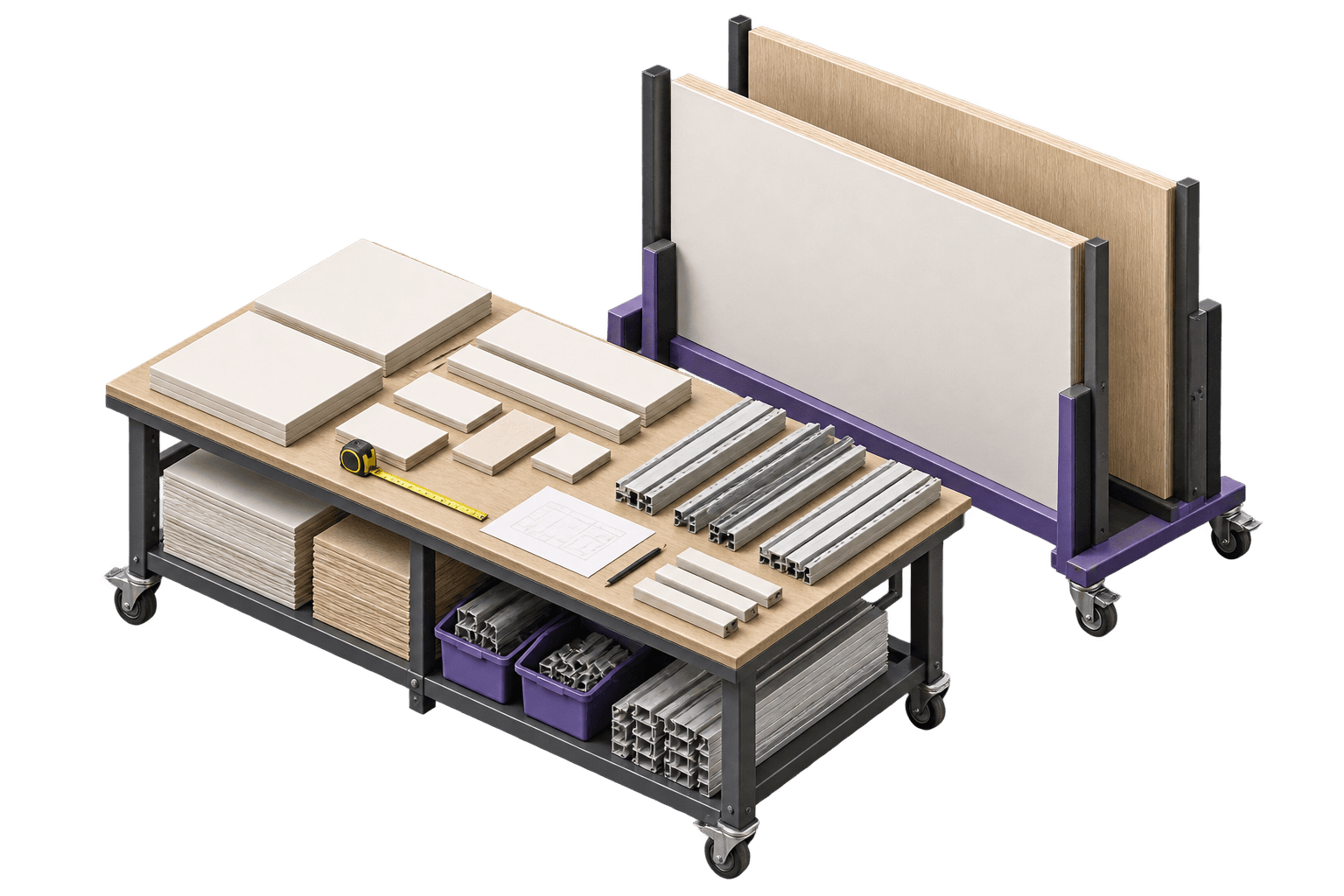
A useful list makes each part recognizable away from the screen. Separate name, order and material; record quantity, length and height in the same unit. A cabinet side and a base need different names even if their dimensions match. Avoid a generic description that mixes parts from different orders.
Separate dimensions, clearance and saw kerf
Clearance adjusts the part dimensions; saw kerf accounts for material consumed between cuts. Edge trims reduce the sheet’s available area. Check these settings separately in Otimiza, using the row clearance when a part needs its own adjustment. Also review permitted rotation and edges requiring finishing.
Complete the review before calculating
After importing CSV or JSON, compare quantities and materials with the original list. Generate the plan, review the map and sequence with production, and save a project copy. A dimension change calls for a new review: an earlier result does not replace the updated inputs.
For your next review
- Recognizable names and orders
- consistent units
- correct material
- checked quantities
- reviewed rotation and finishing.